 Search
 Product Finder
Inside Silicon Designs MEMS Accelerometer Technology
What Is a MEMS Variable Capacitance Accelerometer?
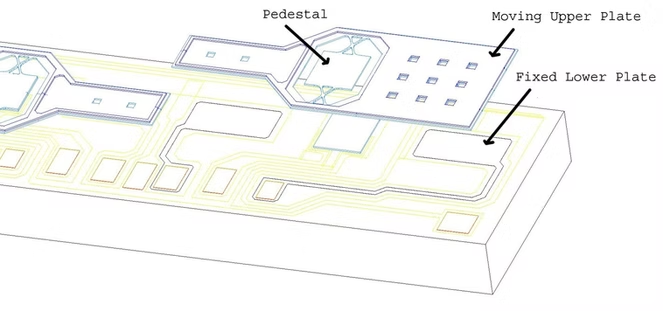
These accelerometers detect changes in acceleration by measuring capacitance, the space between conductive “wings” on the sense element and the stationary plates beneath them. As motion causes these wings to shift, the resulting changes in capacitance are converted by the ASIC into a usable analog voltage output. This architecture provides a true DC response, meaning the sensors can capture both static acceleration (like gravity) and dynamic vibration.
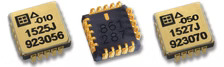
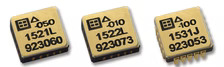
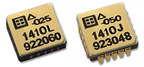
Each MEMS and ASIC pair is housed in a hermetically sealed, gold and ceramic package. This design ensures reliability and long-term durability in industrial and inertial environments.
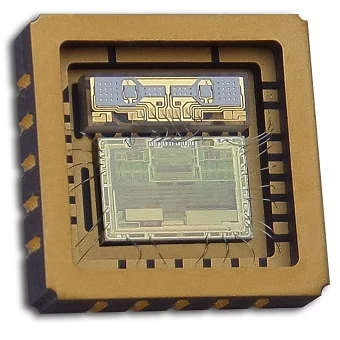 Interior of SDI Model 1410
How It Works: Capacitance-Based MEMS Sensing
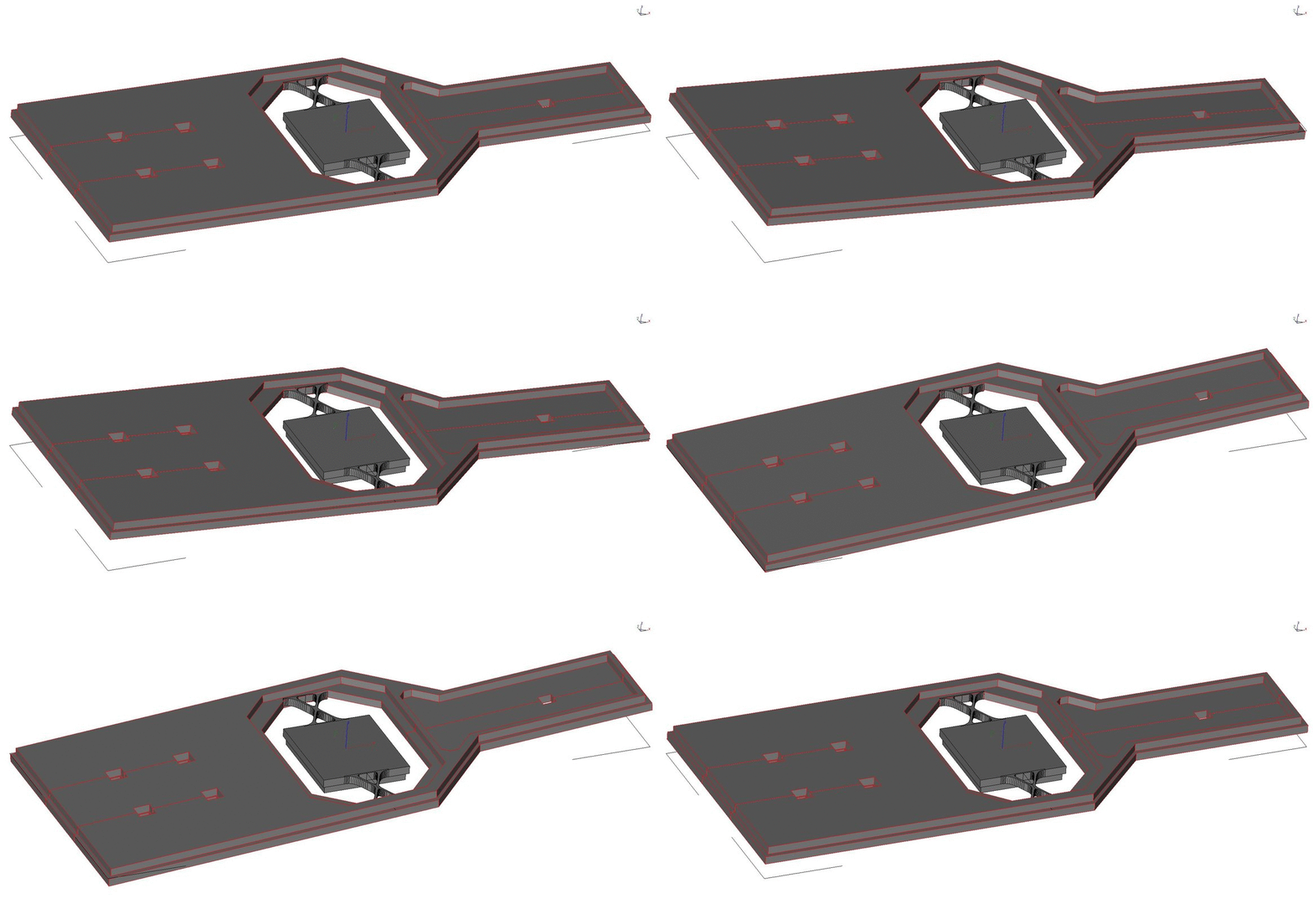
The ASIC reads these changes using a switched-capacitor amplifier, converting micro-level deflections into a voltage signal that spans ±4V, linearly proportional to the applied acceleration.
Why Choose a Silicon Designs MEMS DC Accelerometer?
Continuous DC Response
Unlike piezoelectric sensors, which require dynamic movement to generate a signal, Silicon Designs’ powered MEMS accelerometers can sense motion, or lack thereof, continuously. They provide accurate output even at 0 Hz (static) conditions, ideal for tilt sensing and slow-changing motion.
Minimal Temperature Sensitivity
Capacitive sensing is naturally more stable under temperature variation than resistive-based methods. Combined with the differential wing design, SDI accelerometers cancel out many thermally induced errors, making them highly stable across wide temperature ranges without needing extensive correction.
Lowest Noise in Class
Silicon Designs engineers every MEMS sense element in-house, optimizing each geometry for its specific g-range. Slower, dampened wings for low-g models and faster, flexible wings for high-g models minimizes ASIC gain adjustments and contributes to the industry’s lowest noise levels.
The Engineering Behind the Sensor
The MEMS Sense Element
Each MEMS structure consists of two moving silicon wings arranged in mirror symmetry, suspended over four lower capacitor plates. This fully active capacitive bridge enables high-fidelity differential sensing. By placing the mass off-center and attaching it via torsion bars, the structure is finely tuned for maximum sensitivity, linearity, and minimal cross-axis interference.
This design is fabricated in-house at SDI’s MEMS cleanroom facility in Kirkland, Washington, a process the company has refined for over 30 years.
The ASIC: Capacitance-to-Voltage Conversion
SDI’s custom CMOS ASIC is engineered specifically to convert low-level capacitance changes into a high-level analog voltage. Using a switched-capacitor amplifier, the ASIC modulates fixed voltages across the moving capacitor plates. As the plates move due to acceleration, the resulting voltage is demodulated, amplified, and output as a low-impedance differential signal (AOP – AON).
The ASIC’s integrated PROM and D/A converters allow for calibration at the chip level, adjusting for bias and scale factor tolerances during production. Its internal buffer amplifiers provide high drive strength and excellent noise rejection, eliminating the need for external signal conditioning.
Signal Output Range
The differential output spans ±4 volts:
- +4V = Positive full-scale acceleration
- –4V = Negative full-scale acceleration
- 0V = Zero acceleration
This wide range allows for high-resolution output, ideal for integration with DAQ systems and embedded platforms.
Sales and Support
Reliable Customer Support from Start to Finish
Get a Quote
Our sales team is available to assist with pricing, lead times, and customized solutions tailored to your specific needs. We work closely with you to ensure you get the best accelerometer solution for your application.
Order Now
With a streamlined ordering process and secure procurement options, placing an order with SDI is simple and efficient. Our commitment to fast processing ensures minimal downtime for your projects.
Tech Support
From initial setup to ongoing performance optimization, our technical support team provides expert guidance to ensure proper integration and reliable sensor operation.
Our Sales Partners
Our experienced U.S. sales representatives provide regional assistance for domestic customers for personalized sales and support. International customers can rely on our global distributor network for local support, timely deliveries, and expert guidance in their regions.
Sign Up For Our Newsletter
Sign up for our newsletter to receive the latest insights on sensor technology, industry trends, and product updates. Be the first to know about advancements in MEMS accelerometers and how they can benefit your applications.
"*" indicates required fields