Search
 Product Finder
Key Insights From Article
- Accelerometers verify aerospace systems under shock, vibration, and environmental stress before aircraft and spacecraft enter service.
- MEMS DC accelerometers provide stable, high-resolution motion data needed to identify fatigue, resonance, and potential failure points.
- Accurate test data supports certification, design refinement, and flight qualification, helping engineering teams make informed decisions with confidence.
Aerospace systems are expected to operate within extremely narrow tolerances, often in conditions far outside the scope of standard mechanical environments. To meet this expectation, engineering teams rely heavily on detailed test data that verifies whether materials, subsystems, and integrated components perform as intended. Among the most essential instruments in this validation process are MEMS DC accelerometers, which provide critical measurements during both ground testing and flight qualification. Their role is foundational, not only for evaluating how systems withstand shock and vibration, but also for informing the design decisions that follow.
Accelerometers are tasked with capturing motion signatures that indicate fatigue, structural resonance, or failure risk. In aircraft development, these measurements are necessary for certifying flight safety, and in spacecraft testing, they inform the operation of systems where physical access post-launch is impossible. The success of these programs depends on data that is stable, repeatable, and high-resolution.
High-Resolution Vibration and Shock Analysis for Flight-Critical Systems
Every aircraft must pass through rigorous vibration and shock tests before approval for use. These tests simulate aerodynamic stress, engine resonance, ground handling impact, and repeated load cycles experienced across the operational envelope. An accelerometer model used in this setting must deliver low-noise output across a broad bandwidth and survive repeated exposure to harsh mechanical input. Any data inconsistencies, sensor drift, or hardware failure compromises the integrity of the test campaign and introduces avoidable downstream risk.
MEMS DC accelerometers provide high linearity, consistent thermal behavior, and resilience to electromagnetic interference. This makes them well-suited for environments where electromechanical systems produce high-frequency vibration signatures that require precise capture.
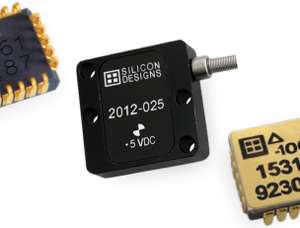
Paired with data acquisition systems, SDI’s test and measurement accelerometers help define fatigue life, identify modal frequencies, and provide the motion profile data that flight test engineers need to make clearance determinations.
Validating Spacecraft Performance Under Zero-Margin Conditions
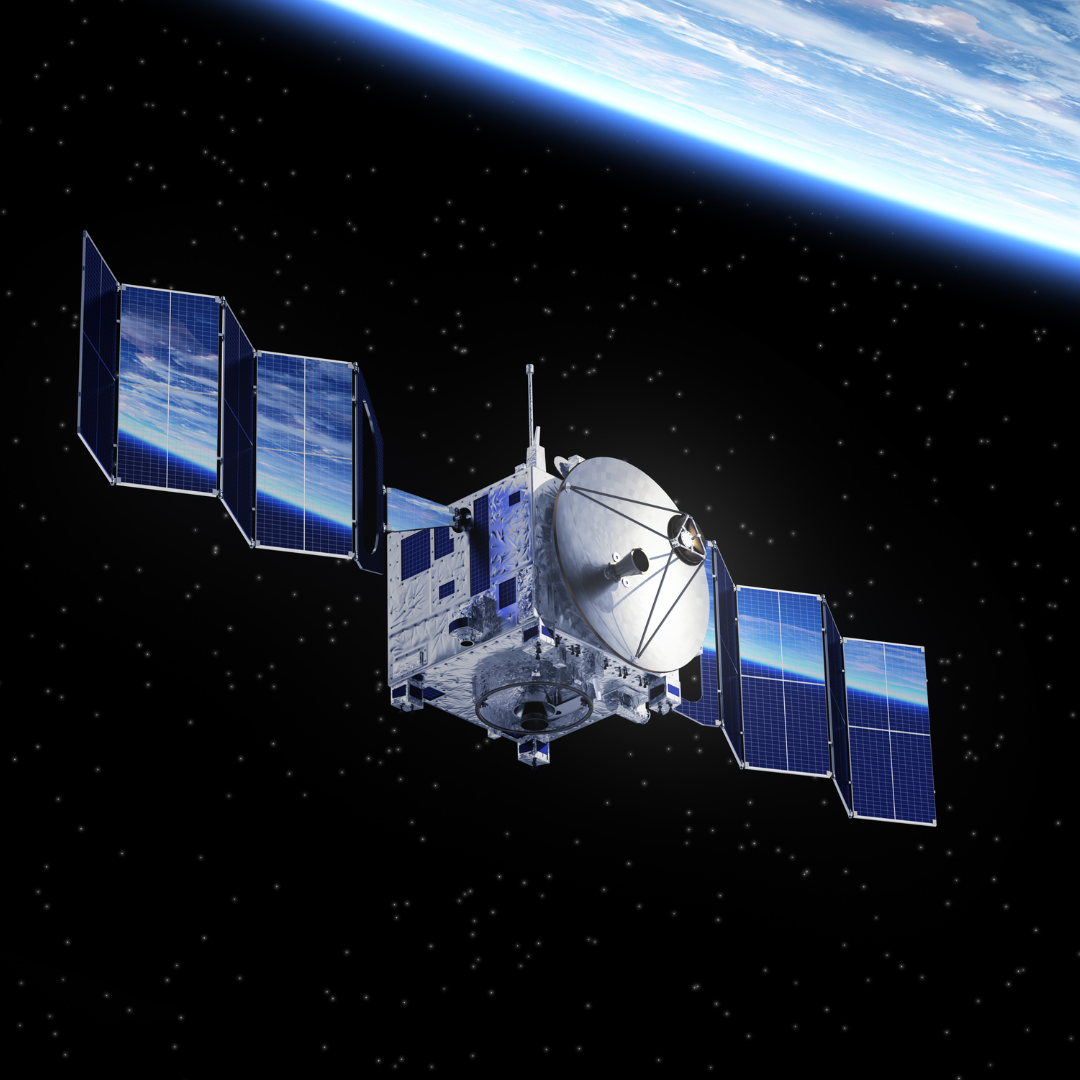
Mechanical shock from launch vehicles, sustained exposure to temperature extremes, and the absence of gravity in orbital conditions place unique demands on spacecraft components. MEMS accelerometers help engineers verify that payload separation events, deployment sequences, and subsystem operations execute within defined tolerances. This is particularly true for small satellites and modular platforms, where compact subsystems must fulfill multiple roles and sensor count must be minimized.
Unlike traditional piezoelectric accelerometers, MEMS designs offer compact form factors and frequency measurement down to DC without sacrificing the bias stability required for long-duration missions. Accelerometers used in these environments must also demonstrate thermal resilience and signal integrity over sustained exposure to environmental extremes.
Enabling Data-Driven Aerospace Design
Flight testing has always been essential to aerospace development, but the role of sensors has evolved. What was once used purely for pass-fail validation is now a source of continuous optimization. Accelerometer data supports the development of simulation models and test environments by providing real-world measurements of motion, vibration, and structural response. These applications require not only accurate data during field tests, but also long-term stability under static and dynamic loading conditions.
Advancements in MEMS accelerometer design, particularly those focused on DC response and durability, deliver consistent measurement performance under variable environmental and operational conditions. This enables reliable data acquisition across both qualification testing and engineering iterations. As aerospace systems grow more software-defined and data-dependent, high-fidelity motion data is increasingly integral to system optimization and design refinement, reducing the need for physical prototypes, accelerating refinement, and informing more effective design cycles.
Accelerometers Supporting Testing and Certification
Every data point that guides aerospace engineering choices originates from an accelerometer, and not all accelerometers are built with the same purpose in mind. For applications where vibration and shock data define whether a system can be certified, launched, or trusted, the selection of an accelerometer is a technical decision with program-wide implications.
If you’re designing or validating components for aerospace applications, speak with our engineering team to identify the right MEMS DC accelerometer for your environment.